
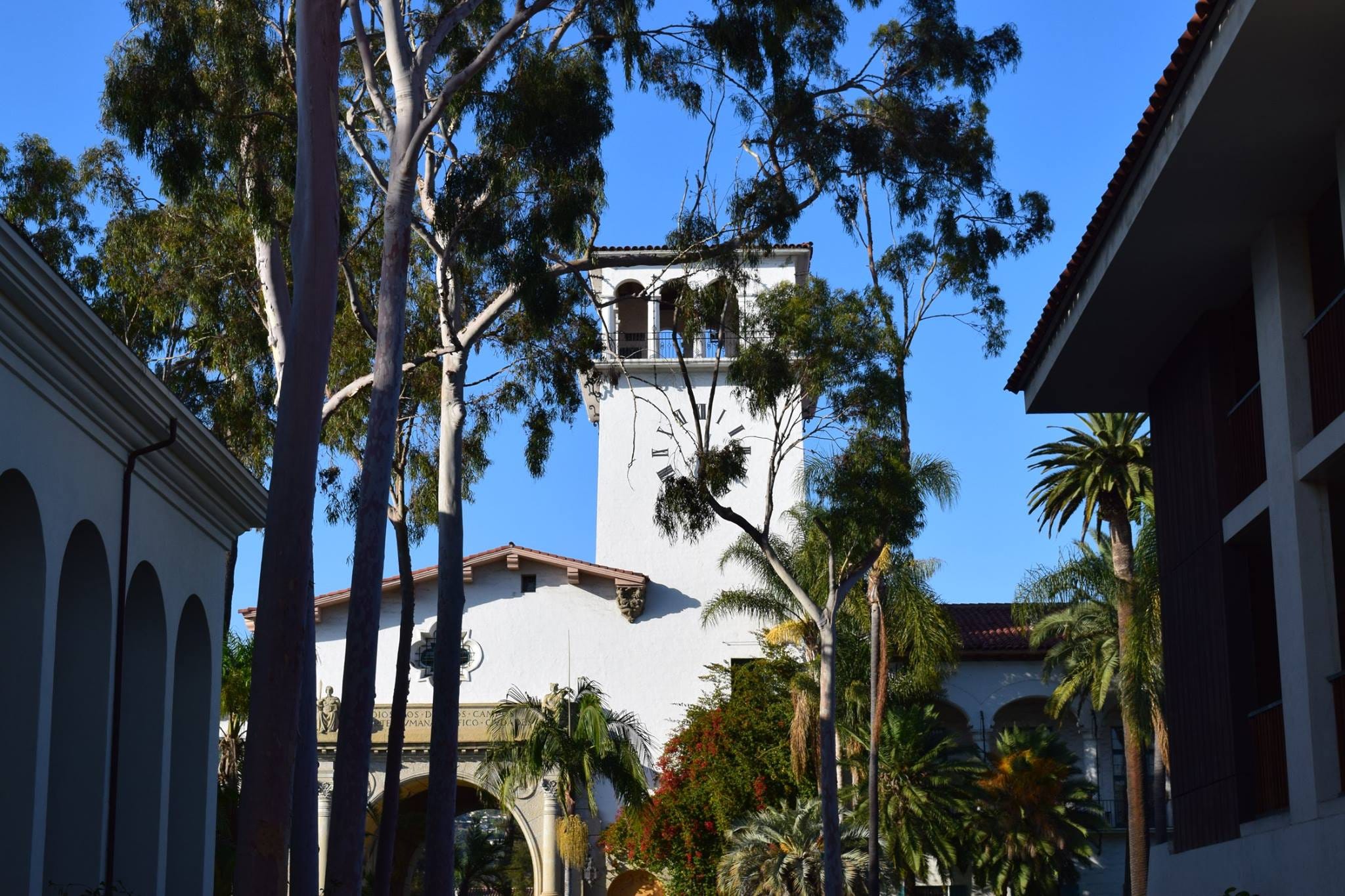
Photo credit: Robert Stark
The sleepy coastal haven of Santa Barbara serves as the ideal case study for examining the intersection of highly polarized battleground over housing, wealth, and identity. We aren’t just choosing a figurehead to cut ribbons at the harbor; we are voting on who thrives and survives in the 805. To understand this race, you have to look past standard national blue vs red labels. Our local politics are defined by hyper-localized ideological blocs, unique class dynamics, and a fierce civil war over land use.
City councilwoman, Kristen Sneddon, is a progressive Democrat who represents anti-gentrification NIMBYism, strict architectural preservationism, and environmentalism. This highly specific local phenomenon of anti-gentrification NIMBYism, unlike conservative NIMBYs who block housing to protect property values, Sneddon scrutinizes market-rate development which she views as a vehicle for gentrification that displaces lower income residents. Her campaign has high appeal for progressive activists, environmentalists, and students, as well as some appeal to working-class Latino renters. Sneddon is aligned with the Santa Barbara County Democratic Party, the Sierra Club, the CAUSE Action Fund, and the Santa Barbara Teachers Association.
City councilman, Eric Friedman, is a pragmatic, business-friendly moderate Democrat. While Friedman is not a full blown YIMBY, like San Francisco State Senator Scott Weiner, he sits the closest to the YIMBY camp in this race. Friedman views housing construction through a lens of economic viability, arguing that the city must foster responsible development to maintain a sustainable tax base and prevent city bankruptcy. Thus, he is much more willing to green light density and commercial projects, such as voting to approve the controversial 250-room Garden Street Hotel in the Funk Zone. Friedman’s campaign has high appeal for affluent homeowners, both families and seniors, and business owners and lower appeal for progressives, working class renters, and students. Friedman is aligned with retiring Mayor Randy Rowse, U.S. Representative Salud Carbajal, and local labor and business unions.
Wendy Sims-Moten is a progressive Democrat who serves as the Executive Director of First 5 Santa Barbara County and is the former executive director/board president of the Santa Barbara Unified School District. Sims-Moten’s family-centric progressive campaign is social equity focused, particularly on human infrastructure. On the NIMBY vs. YIMBY divide, Sims-Moten is a moderate preservationist who avoids extreme pro- or anti-growth rhetoric but rather favors a case-by-case approach that prioritizes community benefits—like childcare centers or educator housing—over raw commercial profit. Sims-Moten’s campaign has high appeal for K-12 educators, working class Latino families, and other POC identity blocks and low appeal for more affluent voters, and single young professionals. Her campaign is aligned with public school advocates, non-profit networks, and equity-focused civic organizations.
Matt “Boat Rat Matt” Kilrain is the anti-establishment populist outsider. On the NIMBY vs. YIMBY spectrum Kilrain is a pure preservationist but purely localized to the harbor. He opposes corporate real estate developers and luxury hotels because he views them as “tyrannical” forces destroying the working-class waterfront culture. Kilrain’s platform sits at a contradictory crossroads, blending populist NIMBYism with aggressive laissez-faire libertarian economics. While his support is fairly marginal, he has the most appeal to blue-collar harbor workers, independent tradespeople, and anti-incumbent voters and low appeal for mainstream partisan blocks. He is most aligned with unaffiliated grassroots voters, local fishermen, and independent waterfront residents.
Mark G. Redmond embodies a populist, grassroots ideology centered on strict municipal transparency and holding local government accountable. As a frequent speaker during public comment periods at City Council meetings, his platform focuses on exposing perceived government waste and challenging institutional decision-making. Through his independent media platform and podcast, Ears on Santa Barbara, Redmond champions the idea of bypassing mainstream political channels to amplify the unfiltered grievances of ordinary citizens. Redmond leans toward the NIMBY side of the spectrum, though his stance is driven by a deep distrust of government overreach rather than a desire to protect property values. He routinely opposes high-density rezoning and major city-led redevelopment initiatives because he views them as waste-heavy projects pushed by an untrustworthy City Hall.
Michael Stilwell is running as a minimalist, anti-establishment outsider whose platform is defined by its lack of conventional policy proposals or institutional alignment. Operating without a formal campaign apparatus or a public agenda on pressing issues like the budget deficit or the State Street Master Plan, Stilwell’s candidacy functions purely as a protest option. His overarching ideology is rooted in providing a blank-slate alternative for voters who want to completely reject the city’s current political leadership and established council members. Operating on an ideology of critical consciousness and systemic rejection, Stilwell views current municipal policy as a symptom of a societal breakdown. Because his platform completely dismisses standard economic development in favor of changing how people “relate to the earth,” his philosophy appeals to counter-culture advocates and environmental idealists. Stilwell falls completely off the conventional spectrum, viewing Santa Barbara’s housing shortages not as a debate over supply or neighborhood preservation, but as a systemic symptom of how modern society maladapts to the earth.
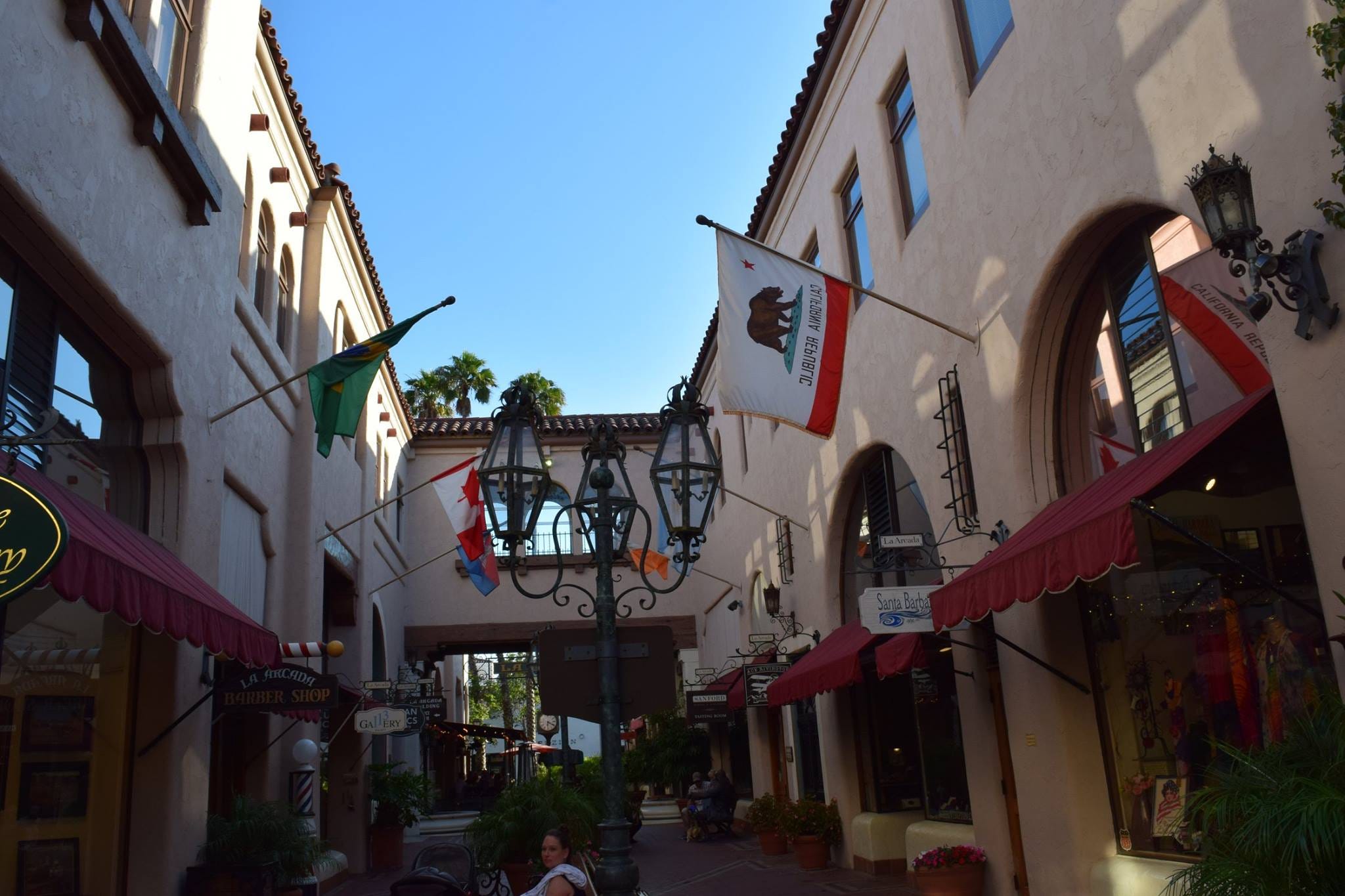
Photo credit: Robert Stark
Because Santa Barbara is small and deeply interconnected, voters have formed unique local coalitions that don’t match national politics. The Progressive-Labor Coalition (Sneddon/Sims-Moten) is an alliance between young college students, the CAUSE Action Fund (working-class immigrants), and affluent eco-conscious White progressives. They find common ground in climate action, public education funding, and heavy tenant protections. The Pragmatic-Preservation Coalition (Friedman) connects affluent business owners, corporate real estate interests, and moderate-to-conservative home owning families and seniors. They unite around fiscal discipline, opposition to rent control, and keeping the local economy business-friendly. The more niche Blue-Collar Populist Coalition (Kilrain) is an alliance of harbor workers, independent contractors, and libertarian-leaning skeptics. They reject both major parties and focus entirely on protecting working-class autonomy from City Hall overreach.
Local votes for mayor heavily reflect wider statewide and presidential voting patterns, but with a distinct twist. While Santa Barbara votes overwhelmingly blue in presidential elections, our local municipal races reveal just how fractured that “blue” coalition really is. A vote for Sneddon aligns with the progressive, democratic-socialist wing of statewide policies, while a vote for Friedman mirrors the moderate, establishment corporate-Democratic wing. We also see clear echoes of the 2021 mayoral race in which a crowded field split the progressive vote, allowing moderate-conservative, Randy Rowse to win the seat outright with just a 39% plurality of the vote.
In this mayoral race, identity politics functions not as a collection of symbolic talking points, but as a direct proxy for the city’s intense battles over land use, economic survival, and neighborhood preservation. Because the city’s socioeconomic architecture is so deeply fractured along demographic lines, campaigns use equity and social justice frameworks to signal who they intend to protect politically and economically. For progressives like Wendy Sims-Moten and Kristen Sneddon, centering identity means framing rent control, public school funding, and zoning restrictions as essential moral shields to prevent the gentrification and outward migration of the city’s working-class Latino population. Sims-Moten, who is the only candidate of color, heavily anchors her political identity in progressive racial equity policies, championing institutional reforms aimed at dismantling systemic bias. During her tenure on the Santa Barbara Unified School District board, she was a driving force behind sweeping initiatives that aligned with Black Lives Matter demands, which included voting to declare racism a public health emergency and mandating district-wide anti-bias training. Her platform emphasizes systemic transformation over incremental reform, focusing on restructuring local government and civic institutions to prioritize restorative justice, civil rights advocacy, and targeted support for historically marginalized communities. The moderate and populist candidates like Eric Friedman and Matt Kilrain intentionally adopt identity-neutral universalist rhetoric; by framing municipal governance through colorblind metrics like fiscal discipline, tourism-driven solvency, or individual autonomy.
Santa Barbara’s geographic neighborhoods form clear predictable strongholds shaped by housing density, wealth, and demographics. Kristen Sneddon commands a powerful base in the historic, environmentally conscious, and affluent hillsides of the Riviera and Mission Canyon, where high-earning, predominantly white homeowners strongly favor her strict viewshed protections and resistance to high-density zoning overrides, alongside progressive tenant support in the lower-density pockets of Samarkand. These hillside neighborhoods feature Santa Barbara’s highest median ages, highest rates of homeownership, and lowest concentrations of children per household. They are disproportionately populated by wealthy retirees, empty-nesters, and affluent White progressives who use anti-gentrification to virtue signal and as a moral shield for their wealth.
Conversely, Wendy Sims-Moten’s equity-driven, family-centered populism finds its core stronghold in the Eastside and the Westside, neighborhoods with the city’s highest concentrations of working-class Latino families who rely directly on her championed investments in early childhood infrastructure and localized public health resources. This is a leftwing populism that is explicitly oriented toward communities of color and working-class families.
Eric Friedman’s base captures a broad moderate coalition across the upper middle class family oriented single-family neighborhoods of the Mesa, San Roque, and the Upper State Street corridor, who favor his pro middle class family polices. While Sneddon represents left-leaning Seniors, Friedman also represents right-leaning/moderate seniors, who vote defensively to protect their property equity and city financial reserves. Friedman’s coalition also includes downtown commercial property owners who back his market-rate revitalization plans. Finally, populist Matt Kilrain secures small but highly concentrated pockets of support among anti-regulation libertarians and long-term coastal residents in the Waterfront and the Funk Zone, where independent business owners and maritime workers favor his calls to eliminate city permitting fees and bureaucratic red tape.
The most fascinating intellectual friction in Santa Barbara right now is the clash between two entirely different forms of anti-development sentiment. On one side, you have the older affluent NIMBYs, typified by current Mayor Randy Rowse. Their goal is the total preservation of Santa Barbara’s quaint aesthetic, low-density zoning, and to protect their multi-million dollar views and quiet suburban neighborhoods. On the other side, you have the leftwing anti-gentrification NIMBYs, championed by Sneddon. Their objective for blocking development is that they claim any new “luxury mixed-use housing,” will lead to working-class people, who are disproportionally of color, being permanently priced out. While both groups end up blocking housing, their motivations are worlds apart, creating a tense political climate where developers are squeezed from both the left and right and housing supply is constrained.
The evolution of Santa Barbara into an ultra-exclusive enclave is directly tied to how previous mayors managed the perpetual struggle between NIMBY preservation and YIMBY growth. By controlling local land-use policies, past administrations didn’t just alter the city’s skyline, they fundamentally dictated which socioeconomic classes could afford to live in the 805, driving a profound demographic shift. Santa Barbara’s modern housing battle begin with ultra-NIMBY, Sheila Lodge, who was mayor from 1981–1993. California’s rapid urbanization in the late 1970s and 1980s, spearheaded a historic, environmentally focused slow-growth movement. Sheila Lodge’s administration capped commercial square footage and implemented strict neighborhood downzoning, drastically limiting housing supply. As a result, the city transitioned into a wealthy destination with a rapidly aging population, as middle class families found it increasingly difficult to stay or buy homes.
Santa Barbara had a temporary YIMBY supply-side solution pivot under the mayorship of Helene Schneider (2010–2018). As housing costs soared, mayor Schneider’s administration adopted the trial Average Unit-Size Density (AUD) Incentive Program. To incentivize multi-unit workforce housing, the program allowed developers to build high-density apartments downtown with significantly reduced parking and setback requirements. The AUD program sparked the largest high-density private apartment boom in modern Santa Barbara history. It brought a brief influx of young professionals and renters to the downtown core. However, because the program allowed for market-rate housing, many units debuted as luxury apartments, increasing gentrification.
Mayor Cathy Murillo (2018–2022) was heavily backed by local construction and building trades unions because she initially seemed to favor construction to create local blue collar jobs. However, unlike Schneider’s market-driven approach, Murillo’s administration pushed for heavy developer concessions, demanding high ratios of inclusionary affordable housing units and fierce tenant protections. The intense regulations and demands placed on developers caused market-rate construction to slow significantly, frustrating the YIMBY faction who argued that any supply would help the housing crunch. Murillo’s primary focus was on shielding the city’s working-class Latino demographic, who make up roughly 36% of the city’s population, from being displaced by gentrification while neglecting all other supply concerns.
Randy Rowse (2022–present) won the 2021 mayoral seat on a wave of voter backlash against the mid-rise apartment blocks built during Schneider’s AUD boom. His administration took a strict stand against state-mandated housing density overrides, fighting to defend Santa Barbara’s historic low-rise character from development. Under Rowse’s hyper-NIMBY approach, home prices skyrocketed to a median value of over $1.7 million. This cemented a sharp “barbell” demographic split: an increasing population of wealthy, older White retirees who can afford the real estate, alongside a densely packed working-class Latino service population, while completely hollowing out the middle class.
The current mayoral divide directly echoes the historical land-use battles of past administrations. Friedman’s market-pragmatism mirrors the Helene Schneider era, whose pro-density AUD program that initially sparked the city’s modern apartment boom, faced a sharp NIMBY backlash. This is ironic as Friedman is endorsed by ultra-NIMBY mayor, Randy Rowse, though they are both pro-business. On the other hand, Sneddon’s defensive legal maneuvering against state overreach is a direct continuation of Rowse and Lodge’s slow-growth baseline and Murillo’s anti-gentrification activism. The core difference now is that the state has stripped away much of the city’s historic “local control”, turning the mayoral choice into an ideological vote on how to manage an inevitable wave of new density.
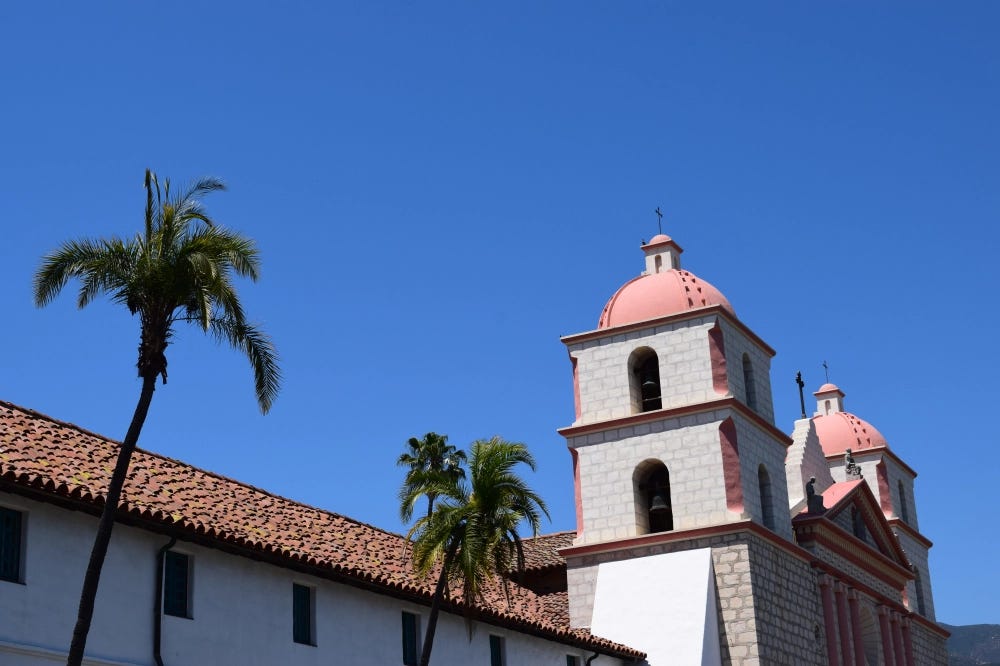
Photo credit: Robert Stark
The “Builder’s Remedy” has become one of the most explosive zoning flashpoints in the 2026 Santa Barbara mayoral race. This legal loophole stems from California’s Housing Accountability Act. When a city fails to pass a state-certified housing element plan on time, it temporarily loses local control over its zoning. Developers are then allowed to bypass local height limits, density caps, and architectural reviews, provided the project includes a set amount of affordable housing. Because Santa Barbara missed its state deadline, developers can utilize the loophole to pitch highly controversial, large scale developments. The most controversial example is a massive eight-story, 270-unit residential complex proposed directly behind the historic Santa Barbara Mission. The project, which normally violates the city’s strict 30-foot height limit, ignited intense community backlash and lawsuits.
Friedman opposes the aggressive, unmitigated use of the Builder’s Remedy, but his approach centers on municipal pragmatism, legal compliance, and market-rate realities. Friedman favors getting the city into full compliance with state housing mandates to close the loophole legally, rather than engaging in endless, costly court battles. He supports high-density transit corridors and mixed-use commercial developments (like the Funk Zone) but prefers they be negotiated through standard city planning channels rather than dictated by the state.
Sneddon views the Builder’s Remedy as an existential threat to Santa Barbara’s historic character and public safety. She strongly supports using the city’s legal resources, environmental review under CEQA, and high-resource fire/evacuation corridor designations to fight back against state-bypassed mega-developments like the Mission project. When she does support housing, she demands strict 100% affordable or inclusionary units rather than private market-rate projects that she believes inflate local land values. Sneddon advocates for adaptive reuse, proposing that empty downtown commercial anchors, like the vacant Macy’s or Nordstrom’s buildings, be retrofitted into municipal family housing rather than allowing developers to tear down existing older buildings. Sneddon would ironically become the most YIMBY mayor because her “no growth” policies would activate Builder’s Remedy.
Sims-Moten opposes the “wild west” nature of the Builder’s Remedy but argues that the city brought it upon itself by failing to plan properly for workforce housing. Basically, Sneddon and Sims-Moten both favor affordable housing over market rate, but Sims-Moten is less NIMBY in how she aggressively favors more affordable housing. Focusing on “people infrastructure” over pure square footage, she wants to reform zoning specifically to fast-track projects that offer clear social returns, such as employee housing for teachers, on-site childcare facilities, or public parks.
Matt “Boat Rat Matt” Kilrain rejects both state mandates and City Hall’s handling of the crisis. He views the Builder’s Remedy as corporate tyranny dressed up as affordable housing. He advocates for flat-out non-compliance with heavy-handed state housing demands, prioritizing local working-class autonomy above all else. He is a radical anti-corporate preservationist who wants zoning rewritten exclusively to protect the working waterfront, marine trades, and local blue-collar spaces from being gentrified by high-density developments or luxury tourism projects.
The 2026 Santa Barbara mayoral candidates perfectly map onto a distinct four-quadrant political compass, where the traditional Left-Right divide intersects with the modern YIMBY-NIMBY housing debate. Each quadrant targets and fosters growth for a completely different socio-demographic slice of the community.
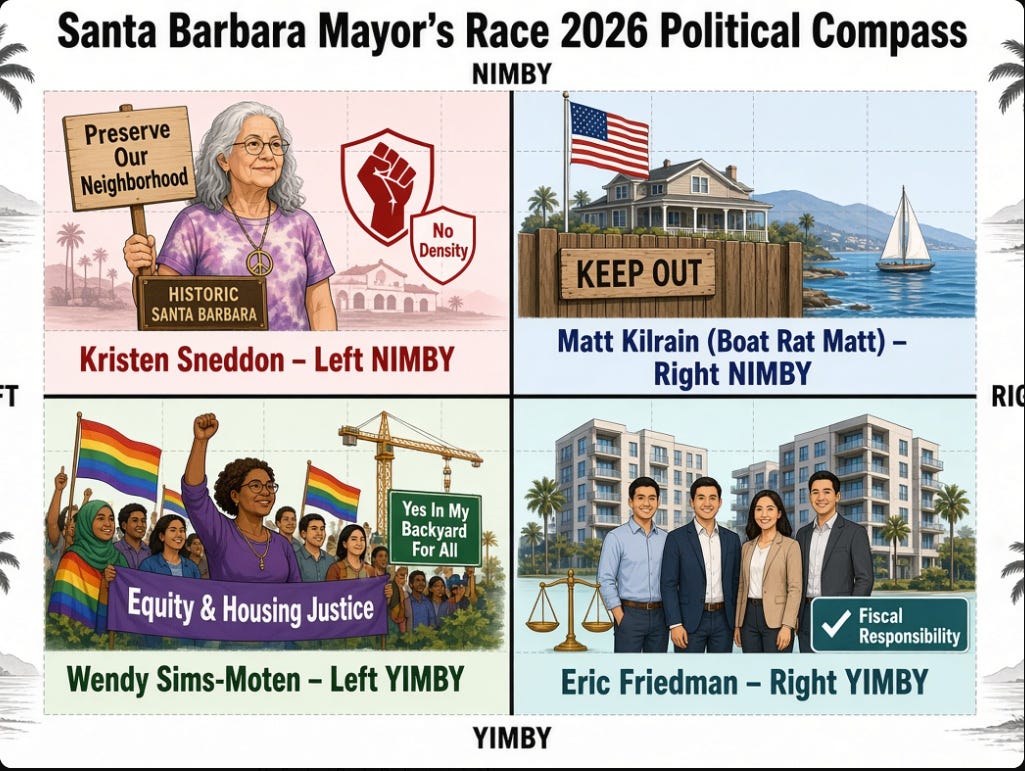
Wendy Sims-Moten is not a true YIMBY, due to her opposition to market rate housing, and no one running truly fits the Left-YIMBY quadrant. However, she is the closest to that stance of any candidate. The Left-YIMBY approach is the most explicitly geared toward people of color and working-class growth. By pushing for heavily subsidized, community-led affordable housing and equity-driven builds, it aims to prevent the displacement of historic minority communities and enable lower-income service workers to live where they work while further expanding the growth of these demographics.
The Right-YIMBY quadrant, which Eric Friedman is most aligned with, is focused on market-rate and workforce housing incentives. This ideology naturally favors young professionals and upwardly mobile families. By opposing developer-deterring regulations like rent caps, it relies on private capital to build the modern, high-density apartments and condos that attract tech workers, medical professionals, and college graduates, which demographically benefits younger and disproportionately White high-income residents compared to the other quadrants.
Ironically, the populist outsider candidate, Matt Kilrain, best encapsulates the Right-NIMBY quadrant like current mayor, Randy Rowse. The Right-NIMBY quadrant caters almost exclusively to elderly White affluent homeowners. By fiercely opposing state-mandated zoning overrides, transit-oriented density, and changes to single-family neighborhoods, it acts as a fortress for established retirees determined to keep Santa Barbara’s suburban fabric exactly as it was when they bought their homes decades ago while keeping out future generations.
The Left-NIMBY quadrant, which Kristen Sneddon epitomizes, forms a unique coalition of affluent elderly preservationists and low income POC communities. Driven by defensive environmentalism, historic preservation, and strict tenant protections like rent control, it unites virtue signaling older, wealthy White liberals wanting to maintain “neighborhood character” with low-income renters who fear that any new market-rate development will spark gentrification and price them out of their neighborhoods.
Ultimately, identity politics in the 805 serves as the ideological vocabulary used to debate a very material question: which demographic gets to inherit the shrinking pie of Santa Barbara. The demographic groups that stand to benefit most in the upcoming election are those at the absolute poles of Santa Barbara’s socioeconomic spectrum. On one end, affluent property owners, retirees, and business executives will find a clear champion in Eric Friedman. His opposition to strict rent control and his focus on fiscal stability act as a direct shield for high-end real estate values and tourism-driven hospitality revenue, ensuring that older, high-net-worth residents can maintain their foothold in the city. On the exact opposite end, lower-income renters, students, and working-class Latino families stand to gain the most from both Kristen Sneddon and Wendy Sims-Moten. Their aggressive push for strict citywide rent stabilization and fierce anti-eviction protections provide an immediate, vital safety net that prevents vulnerable populations from being priced out of their neighborhoods by gentrification.
Santa Barbara’s barbell class divide, demographic split, and aging population means that a single policy shift can cause a massive population growth or decline in specific communities. The proposed strict rent stabilization ordinance is the absolute fault line of this election. For working-class Latino families and students, rent control is a literal lifeline that prevents rent hikes, allowing families on the Westside and Eastside to stay in their neighborhoods and keeping SBCC and UCSB students from being priced out immediately after graduation.
Middle-Class White families in particular, but middle class Latino families too, are caught in the “middle-class squeeze.” They don’t qualify for subsidized low-income housing but can’t afford a $2 million single-family home. This “missing middle” demographic earns too much to qualify for localized public housing assistance, yet lacks the immense capital required to outbid wealthy retirees in an unrestricted real estate market. The population that gets trapped directly in the middle is Santa Barbara’s disappearing middle class, primarily early-to-mid-career professionals, young couples, and middle-income families with children.
When the political battle lines are drawn exclusively around freezing the city in amber to protect elite views or imposing strict regulations that halt new construction, the “missing middle” housing supply completely stagnates. In a city polarized between anti-gentrification regulations and luxury development, the supply of entry-level condos and townhomes completely dries up. This demographic faces a difficult choice between remaining permanent renters under strict caps or leaving the city altogether to raise their children in more affordable, family-centric nearby suburbs like Goleta, inland Ventura County, or leaving the State.
Under a progressive, left-NIMBY administration like Kristen Sneddon, demographic growth is not channeled into any particular group, as new housing is greatly limited. However, her proposed regulatory protective blanket acts as an essential demographic shield for working-class Latino families, locking in their tenancy on the Westside and Eastside and preventing the economic displacement that follows gentrification. By combining strict anti-displacement renter protections with vocal defense of public school programming, her approach targets the retention of existing low-income Latino residents.
Because Sneddon’s strict preservation rules make market-rate private builds financially restrictive, the creation of entry-level condos and townhomes for purchase completely dries up. The aggressive cap on rental profits and strict environmental zoning acts as a sharp deterrent to institutional developers, meaning the creation of mid-tier, market-rate inventory completely stalls which is bad for growing and maintaining the middle class. Thus, Sneddon’s policies would lead to a decline in middle-class families, especially White, but also middle class Latinos. However, Sneddon’s policies are actually friendly to wealthy White seniors and White college students, just not families.
Both Sneddon and Sims-Moten treat the preservation of diverse local schools as a core community asset. This blocks localized gentrification and keeps native language-acquisition resources and cultural equity funding alive within neighborhoods like the Westside and Eastside. Sims-Moten’s platform treats municipal governance as an intervention tool to uplift vulnerable populations, focusing tax dollars on bilingual programs, early childhood education, and public spaces like the Eastside Branch Library. Her approach actively aims to halt the displacement of lower-income Latino and Black residents by treating public youth infrastructure as a vital necessity. These proposed policies foment cultural and ethnic enclavism, besides just economic protectionism.
Sims-Moten’s platform stabilizes lower-income demographics by using city partnerships to subsidize childcare, expand preschool equity, and secure social health resources through her work with First 5 Santa Barbara County. Some of these programs for education and housing support would benefit middle class niches like subsidized housing for teachers. Despite her campaign’s pro-middle class family framing, her polices are more geared toward low income families rather than granting the middle class the best chance of remaining in town. By free or subsidized local programming for early childhood care, her policies allow low income families to keep their children enrolled locally. This directly encourages growth among younger, low-income families, predominantly Latino, allowing them to remain in the area and stabilize the district’s plunging elementary school enrollment. However, there is demographic growth potential, unlike Sneddon’s pure anti-displacement approach.
Conversely, a pro-market, fiscally conservative administration led by Eric Friedman signals a balanced growth environment between affluent families and seniors and middle class families and young professionals while offering less to lower income demographics. Affluent families would benefit from Friedman’s market-driven policies, which keep property values high and encourage luxury hospitality investments that boost tourism revenue. Rent control is an economic deterrent that devalues real estate assets and slows down the capital appreciation that wealthy families rely upon. By opposing strict rent control and advocating for high-yield, luxury waterfront tourism, Friedman’s policies protect high-end real estate equity and invite outside white-collar tech capital. This accelerates the migration of wealthy bicoastal remote workers and affluent retirees who can comfortably absorb multi-million dollar price points. However, the anti-gentrification Left is concerned that this unchecked luxury real estate demand would trigger an outward migration for working class families, fixed-income seniors, and students, who risk being priced out of their long-term rentals without explicit legislative safeguards.
Rather than prioritizing low-income safety nets, Friedman targets the “missing middle”—families who earn too much for assistance but cannot survive market-rate housing costs. Friedman created the city’s Local Housing Trust Fund to build workforce-targeted, below-market-rate housing which is favorable to middle class workers like teachers, nurses, and public safety personnel. This spreads property-tax-fueled resource allocations evenly across the city, avoiding the polarization of isolated “rich” or “poor” campuses. If successful, his policies could bring middle-income children back into SBUSD.
Friedman spearheaded what he termed “the 1,000-foot question”. When the city updated its Accessory Dwelling Unit (ADU) and multi-family zoning laws, standard regulations capped extra rental units at 800 square feet. Friedman successfully fought to push that cap to 1,000 square feet specifically for units with two or more bedrooms. He explicitly directed the planning commission to use this square-footage bump to incentivize developers to build spaces large enough for “future family housing” rather than just single occupants. Since there isn’t space to grow outward and developers favor smaller units, incentivizing multi-bedroom units is the only way to maintain and attract middle class families.
Sims-Moten has used her dual background as an executive and former school board president to create dedicated, multi-bedroom family complexes via public-private partnerships. Leading the school board’s ad hoc housing committee alongside the Housing Authority of the City of Santa Barbara, Sims-Moten pushed to re-zone and convert underutilized school district land into teacher, staff, and workforce apartments. However, unlike Friedman’s proposals, they are set aside only for public servants. From a supply-side perspective, Kristen Sneddon is viewed by critics as being less effective at getting larger, multi-bedroom units built for middle-class families.
Because of how desirable Santa Barbara is, with such a limited amount of space, the amount of high density market rate housing that would be needed to get built would be so massive that it would fundamentally alter Santa Barbara’s character. Consequently, if Left-YIMBYs got their wish and Santa Barbara built a massive amount of low income units, while this could create affordable housing, even politically correct liberals would not want that much crowding and growth from lower class demographics. Friedman’s YIMBY-lite approach will not make Santa Barbara affordable to the working class but at the very least it will retain upper middle class families and young professionals, so Santa Barbara doesn’t turn into a gilded retirement community with a low income service sector.
Matt Kilrain’s platform explicitly seeks to freeze the commercialization of public spaces, protecting the unpolished coastal aesthetic favored by local creatives and harbor hands. His anti-establishment layout lacks the predictable municipal zoning infrastructure and tech-corridor expansion needed to attract high-earning white-collar demographics which could have some benefit for bohemians, artists, and independent tradesman. Rather than letting the free market build high-density housing to solve the supply crisis, his policy is focused entirely on the people already here, stating that the city needs to handle existing infrastructure before allowing further physical growth. His underlying motivation is explicitly protectionist. He notes that he is running to ensure Santa Barbara remains exactly “the type of place he moved to three decades ago.”
This lack of stylistic edge makes it impossible not to feel a certain countercultural affinity for Matt “Boat Rat Matt” Kilrain, whose eccentric, hand-painted populist crusade to “raise the vibe” captures a beautiful, dying strain of authentic California bohemian grit. Kilrain’s anti-development harbor-tribalism is backwards and an economic dead-end that would freeze the city’s housing stock in amber, but his raw, anti-establishment outsider energy offers a refreshing alternative to the sterile, consultant-driven politics of City Hall, making him an intellectually fascinating figure, even if Friedman remains the only practical choice for actual structural growth.
While I rank Kristen Sneddon overall low, the one thing I like about her is her favorable stance to the arts and fostering a bohemian culture. For instance, Sneddon supports local artist havens like The Community Arts Workshop. By fiercely defending the permanent, full closure of the seven-block State Street promenade to vehicle traffic, Sneddon’s vision keeps downtown Santa Barbara a pedestrian-first commons that naturally acts as an incubator for local artists, street musicians, and a bustling nightlife patronized by students and younger residents. The irony is that while Sneddon’s policies structurally starve the city of the housing supply needed to sustain a younger population, her fierce protection of a pedestrianized State Street and her resistance to corporate gentrification inadvertently preserve the unpolished, walkable, and bohemian street life that makes an urban environment dynamic. In contrast, Wendy Sims-Moten views the arts as an institutional vehicle for youth equity and educational development at public hubs like the Eastside Branch Library.
Friedman heavily ties arts promotion to the ongoing revitalization of downtown. He advocates for using public spaces, such as the recent Library Plaza project situated in the heart of the Arts District, to host festivals, literary events, and local artist showcases. Described colloquially as “the library guy”, Friedman favors collaborative public projects that combine community services with creative spaces. His goal is to leverage the arts to bring residents back downtown and support local businesses. However, there is a critique that Friedman champion the arts through a highly structured, formalized municipal frameworks, such as the State Street Master Plan or official library plazas. He views arts and culture as a polished economic driver to revitalize business corridors, rather than fostering a bohemian, underground, or experimental art scenes.
While Eric Friedman represents the only mainstream vehicle capable of puncturing Santa Barbara’s ossified, multi-decade NIMBY consensus; he operates within a highly technocratic, institutional moderate-Democratic mold that lacks a strong aesthetic vision for urban renewal. While Friedman is better for attracting housing and businesses downtown, his desire to reopen State Street to cars and capitulate to high-end hospitality interests could accelerate Santa Barbara’s transformation into a manicured sterile playground for wealthy retirees. However, Friedman has made a specific motion to partially reopen parts of the street, proposing to open six blocks of the promenade to vehicles while keeping the 500 and 600 blocks closed.
Friedman’s critics worry his push to streamline permitting and courting institutional capital could inadvertently open the floodgates to sterile, cookie-cutter corporate architecture. The fear is that by prioritizing speed and market-rate feasibility over the city’s notoriously strict aesthetic vetting, developers might rely on generic, value-engineered “podium mid-rises” that strip downtown of its historic soul. However, the distinct upside to Friedman’s policies is that by slashing through years of prohibitive design-review gridlock, he creates a rare operational opening for truly ambitious, progressive architecture. By lowering the financial risks of the approval process, creative architects are no longer forced to play it safe; they are finally given the regulatory breathing room to propose structurally innovative, avant-garde concepts that can boldly redefine Santa Barbara’s urban fabric without being smothered by red tape.
Friedman deserves credit for his pragmatic, YIMBY-adjacent stances on market-rate density and office-to-residential zoning conversions, which are vital if the city is to escape its current barbell demographic stagnation, yet could still come short at fostering a genuinely vibrant urban landscape. While Eric Friedman shares a foundational, pro-business moderate baseline with outgoing Mayor Randy Rowse, he represents a critical upgrade toward a more forward-thinking style of municipal governance. Friedman understands that absolute resistance to growth is a legal and economic dead end; instead of wasting city funds on futile lawsuits against state mandates, Friedman is willing to work within the system to greenlight high-density transit corridors and mixed-use commercial developments. By prioritizing a sustainable tax base and regional housing partnerships over aesthetic stagnation, Friedman offers a necessary pivot toward economic viability that can keep the city from financial distress while finally opening the door to the type of housing supply Rowse completely blocked.