Casinolabs: A Mystery Thriller Critiquing Postmodernism Set In Las Vegas
Finding deeper metaphysical meaning out of Postmodernism in Vegas

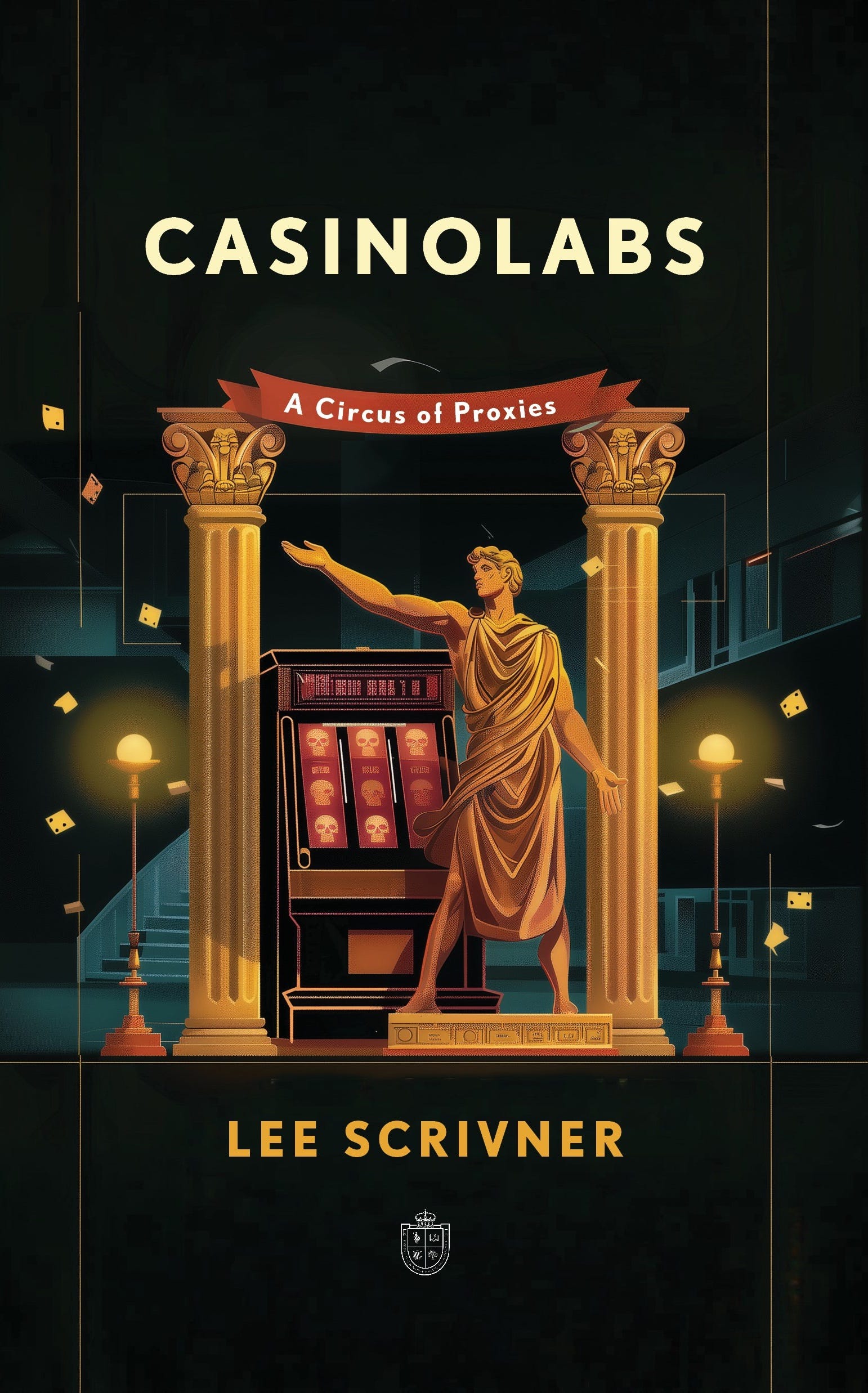
Casinolabs is published by Imperium Press and is also available on Amazon.
Casinolabs is a satirical, mystery, psychological thriller novel set in Las Vegas by Lee Scrivner. The book’s protagonist Morton Waterhouse, works as a greeter at the Roman themed casino, Caesars Empire, which is based on Caesars Palace. Morton wears a Roman toga like those that Caesars Palace’s greeters used to wear. Morton is obsessed with history and his job allows him to LARP as a Roman aristocrat, often distracting him from his job.
Morton is somewhat bitter that his master’s in history did not pay off career-wise, thus his Roman persona is a cover for his low social and economic status and lack of identity. However, he is stoic and not necessarily the angry incel archetype. Morton reminds me of Ignatius J. Reilly in A Confederacy of Dunces. He also reminds me of Spencer Grunhauer in Dan Baltic’s satirical novel, NUTCRANKR, as far as the humor of his autistic philosophical views getting intertwined into his work environments and being a young man at odds with modern society.
Caesars Palace
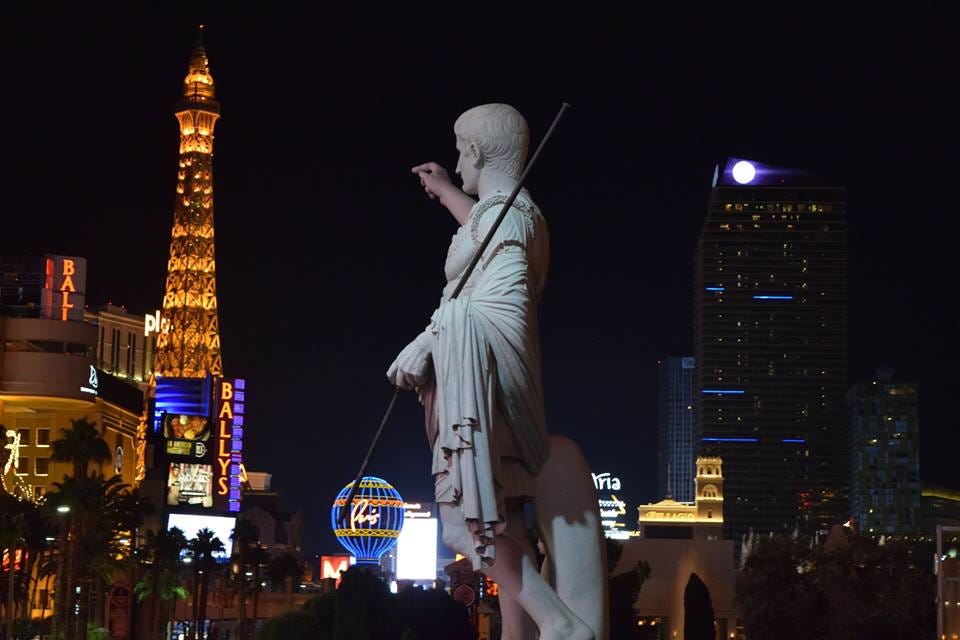
Photo credit: Robert Stark
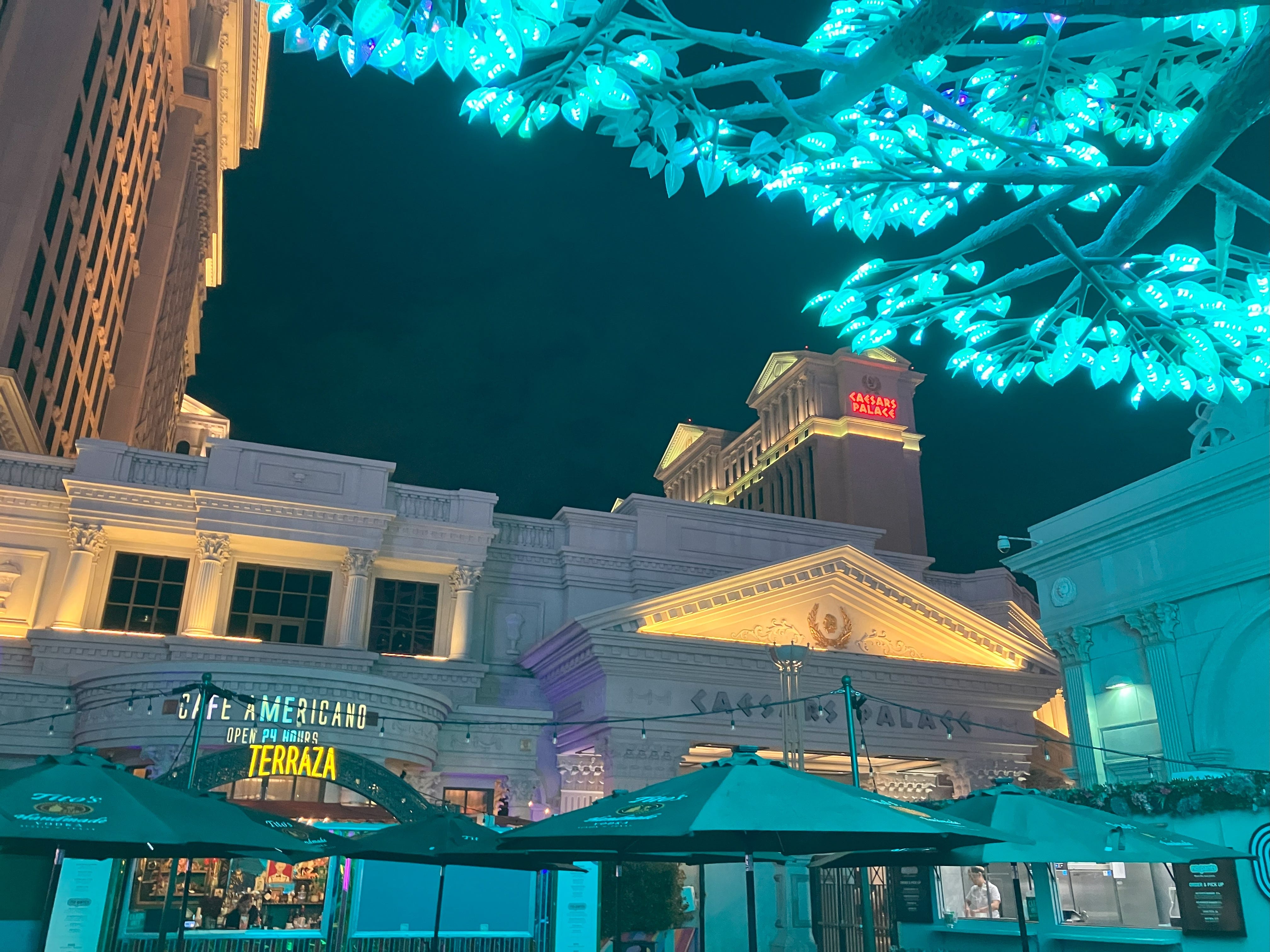
Photo credit: Robert Stark
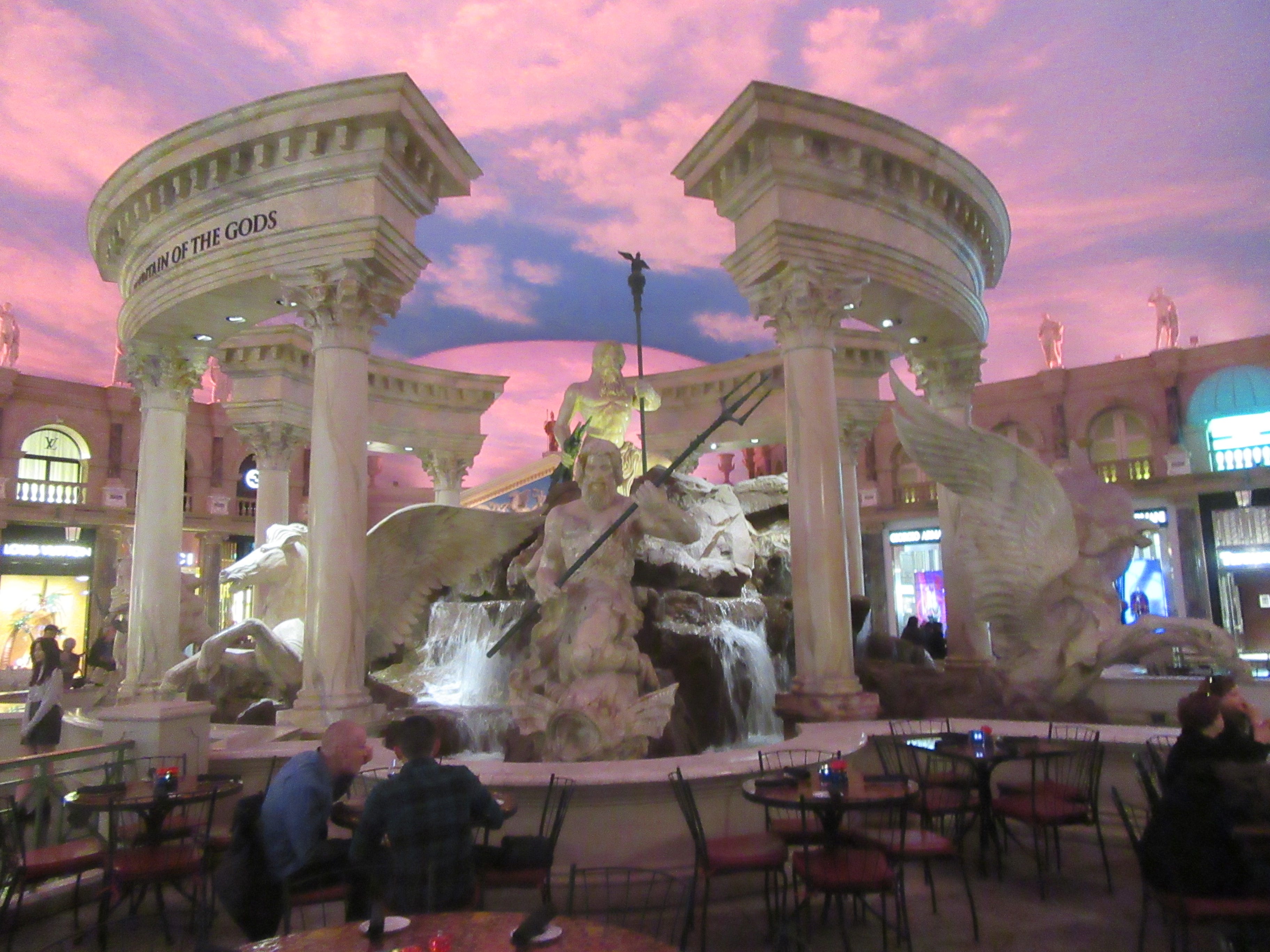
Photo credit: Robert Stark
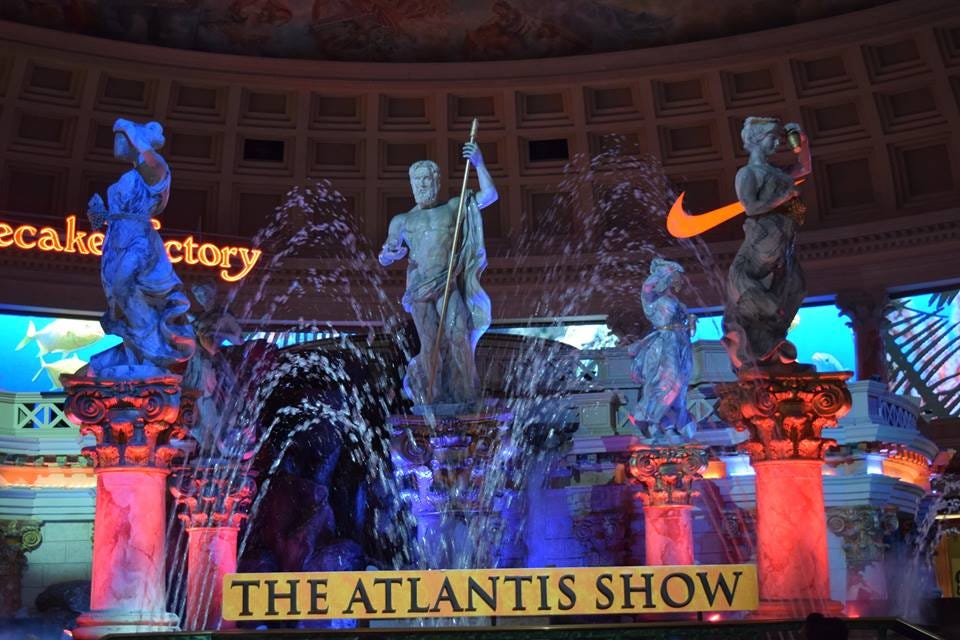
Photo credit: Robert Stark
Morton gets in trouble for greeting guests in Latin, “salvete cives Romani,” which means greetings citizens of Rome. His boss tells him to say “hail Caesars” in plural, which implies that everyone is a Caesar or king. This was America’s marketing mantra of the post WWII era which no longer exists. Morton rejects this, thinking “If everyone is a Caesar then what am I?” Morton has contempt for the clientele of Vegas who he views as rubes and plebeians. There is a need for many to feel like they are special and have made an impact on the World and history. Later in the novel, Morton boasts to himself that he is an author of civilization’s story. Contrary to marketing messages and social media, the reality is that most people don't matter and are just cogs.
Robert’s paintings of vintage Caesars Palace
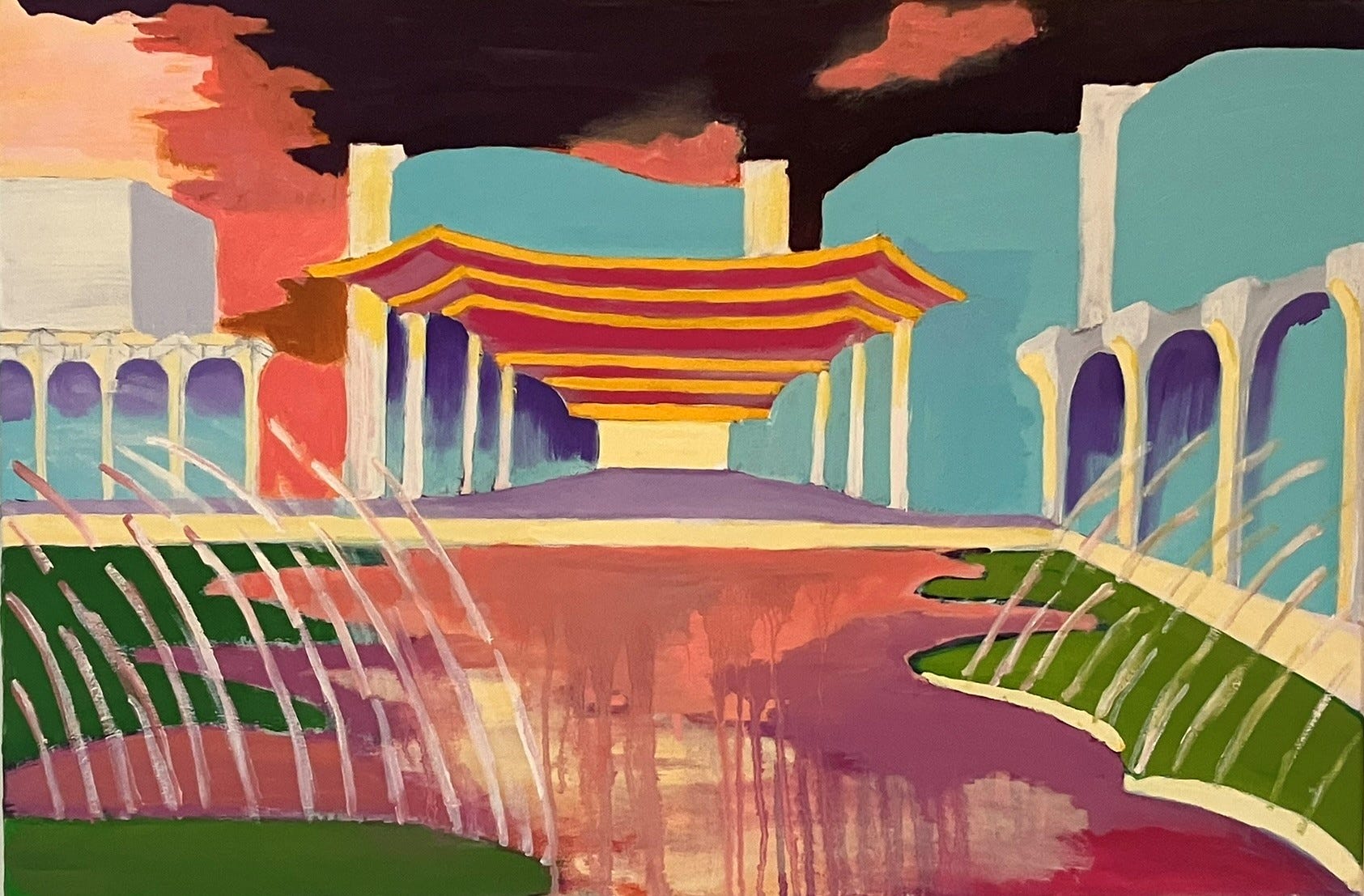
Photo credit: Robert Stark
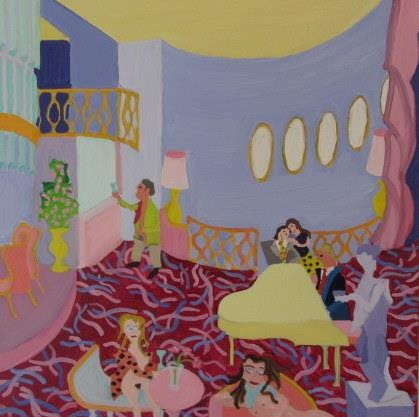
Photo credit: Robert Stark
Morton hopes that his obsession with Ancient Rome will finally have real world relevance when he is recruited to work at Casinolabs, a casino theme design firm. Morton desires more wholesome casino themes and finds hypocrisy in the family friendly rebranding. In response to a discussion on how to make the casino more kid friendly, Morton makes an autistic comment about natalist family policies in Ancient Rome. Morton also hopes to see Roman temples at the casino.
Despite Morton's idealistic and perhaps naïve nature, he is skeptical and confused about why Casinolabs recruited him. His role becomes Kafkaesque in its unclearness. For instance, he initially has a surprisingly successful presentation and is complimented on how much of an asset he is, but then he gets into trouble and is later told that he doesn’t work there. The deeper he gets into Casinolabs, the more he realizes that it is not what he initially thought and there is an element of blackmail involving these bizarre experiments.
There is this vast secret labyrinth-like network of corridors underneath Casinolabs. The labyrinth becomes more and more surreal and disorienting and at one point Morton ends up in the storm tunnels where the homeless live. There is an experiment in which he plays video poker and his consciousness enters into the game, though the book takes place before VR technology. While the book veers into magical realism, it is not quite of that genre. The book follows a mostly linear and coherent plot and is not quite William S. Burroughs’ Naked Lunch or a David Lynch film.
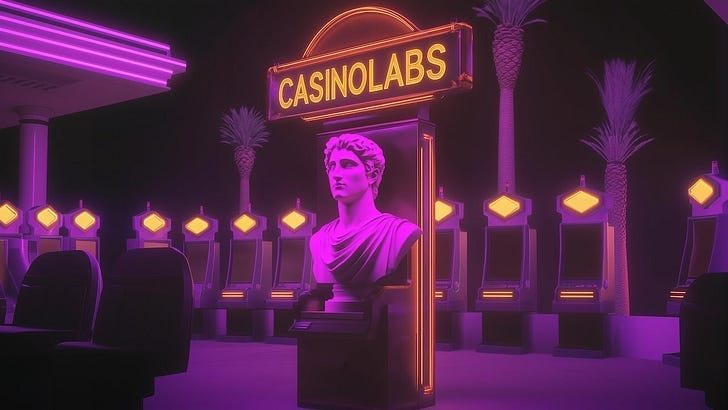
Photo credit: Lee Scrivner
There is a concurrent narrative about a psychologist, Dr. Steven Nichols, who is being investigated for fraud, regarding a claim from his patient Bill about a Cold War era military experiment at a nuclear test site that caused ailments including “atomic amnesia.” Dr. Nichols has unconventional methods, such as role playing, which he uses as a defense regarding the fraud allegations. Dr. Nichols suspects that Bill has Munchausen Syndrome, in which he fakes symptoms to garner sympathy and attention, as well as stolen valor to create an identity for himself, as his family does not respect him. It is revealed that Bill is Morton’s estranged father and Morton only reunites with his father when he says that he only has days to live.
Out of the blue, Bill receives a settlement of $752,321.63 cash from some mysterious government agents in exchange for agreeing to shut up about the military experiment. Bill ends up splurging on strippers, his new much younger girlfriend, and gambling, to relive his glory days as a high roller. Dr. Nichols is worried that this could incriminate him for fraud, so he discourages Bill from spending. This is symbolic of older generations squandering the inheritance of their descendants whom they have contempt for. However, Bill offers Morton some cash which he turns down.
All these different narratives, events, and characters become intertwined, hinting that there is some grand destiny beyond random coincidences. Morton’s sister, Scarlett, works for Casinolabs, then Desi who is Morton’s roommate and the cousin of Bill’s girlfriend, Sveta, gets hired to work there as a dancer, and then what is Nichols doing at Casinolabs? There is also a theme of MK Ultra mind control, secret government black sites, and Area 52 in Nevada. The mind control could also be a metaphor for how mass media erases people’s memories of the past.
A lot of the zany humor is in the fighting throughout the book, starting from when Morton visits Bill’s house for the first time in a long time, and then involving Bill and Nichols at the casino. This fighting and chaos continue with Casinolabs’ staff Helen, Stuart, and Dough which get really catty. They behave more like theater kids than a top secret organization. There is also a scene where some Frat bros taunt Morton at his casino job, “Look it’s Caesar” and joke “Come toss my Caesar salad,” which implies innuendo.

Casinolabs is a critique of social atomization and the breakdown of families. Morton’s parents are divorced, his mother is not in the picture, and he is estranged from his father. He also has a bad relationship with his sister who has utter contempt for him, viewing him as a loser and an embarrassment, getting angry when he makes politically incorrect comments at Casinolabs. Dr. Nichols has a daughter who he lost touch with but meets up with again due to a random turn of events. Despite Morton’s bad relationship with his family, he is unhappy, desiring to live in a society where family ties and cultural ancestral inheritance are valued and to mend relations with his family.
While the book is not overtly political, certain themes may resonate more with a right-leaning audience. Just the protagonist Morton being a struggling young cis White male goes against the intersectional narrative. There are certain terms that Morton thinks that those who are terminally online would recognize like phenotype and sportsball. However, since the book is satirical, a wide range of people would enjoy it, as it does not aggressively push a political agenda. Rightwing art tends to fail in that it tries too hard to be political propaganda, while the Left has been more effective at winning people over subconsciously.
Lee Scrivner in Las Vegas

Photo Credit: Lee Scrivner
While Casinolabs is not explicitly about when it takes place, I assume it takes place in the 90s since Vegas is rapidly expanding, and transforming to become more family friendly. Also, Morton’s father Bill is a vet who served during the Eisenhower era, and the author, Lee Scrivner, grew up in Vegas during the 90s. You can tell by reading the book that it describes Vegas the way a local might, going into the nitty geographic details.
On the surface, Las Vegas epitomizes hyper-capitalism, consumerism, hedonism, and this radical “End Of History” break with all tradition and convention. This is why a lot of social conservatives and trad types as well as anti-capitalist lefties hate Vegas. Vegas is the most postmodernist city in America if not the World, which is different from modernism in both politics and aesthetics. Instead of creating something entirely new and cut off from the past like modernism, postmodernism cuts and pastes various parts of the past. However, it is replicas of the aesthetics and symbolism of the past that lack real historical connection.
Welcome to Casinolabs!
Now postmodernity’s not so drab.
You can dismantle civilizations and rebuild them at convenient locations.
Like it’s all prefab.
You can build sultan’s pleasure-domes, pirate ships, pyramids, and Stonehenge slabs.
You’ll help roamin’ plebs and serfs become omnipotent emperors! Casinolabs!
-Jingle from Casinolabs
Las Vegas was practically built from scratch and is constantly reinventing itself and destroying its past. Casinolabs references the demolition of iconic old casinos like the Sands. Recently, The Tropicana, which was one of the oldest casinos on the Strip, and The Mirage, which was the first of the themed postmodernist mega-resorts, were shattered. There is nothing like the cathedrals and monuments of the past that were built for permanence. One of the Casinolabs proposals is for a Las Vegas Las Vegas casino that has miniatures of all the major casinos in Vegas. It is a parody of remake culture, such as The Paris and New York New York casinos in Vegas, which to be fair, both have a certain charm to them. Not to mention California Adventure at Disneyland, a theme park with replicas of California landmarks in California for those too lazy to travel the State, or movie remakes. It is symbolic of a late-stage empire, late-stage capitalism, and people running out of new ideas and lacking creative vision.
The Paris Casino
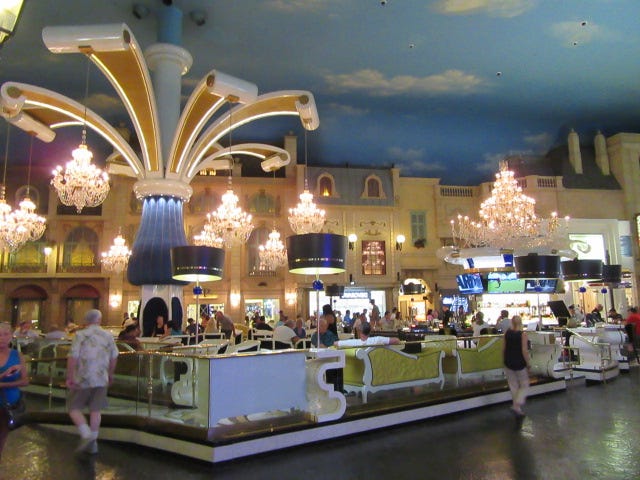
Photo credit: Robert Stark
New York New York
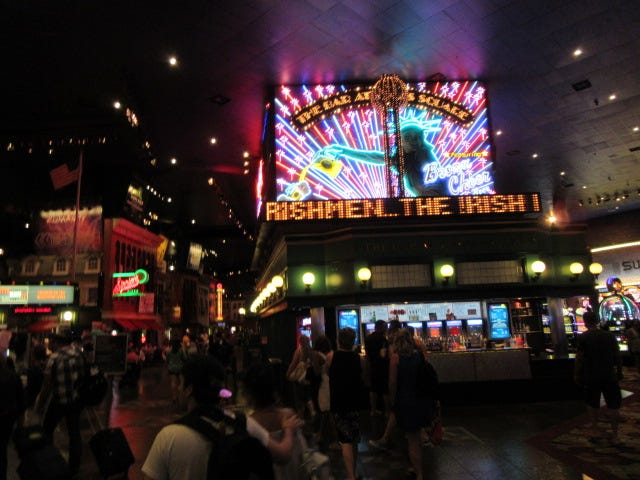
Photo credit: Robert Stark
The Mirage

Photo credit: Robert Stark
Luxor
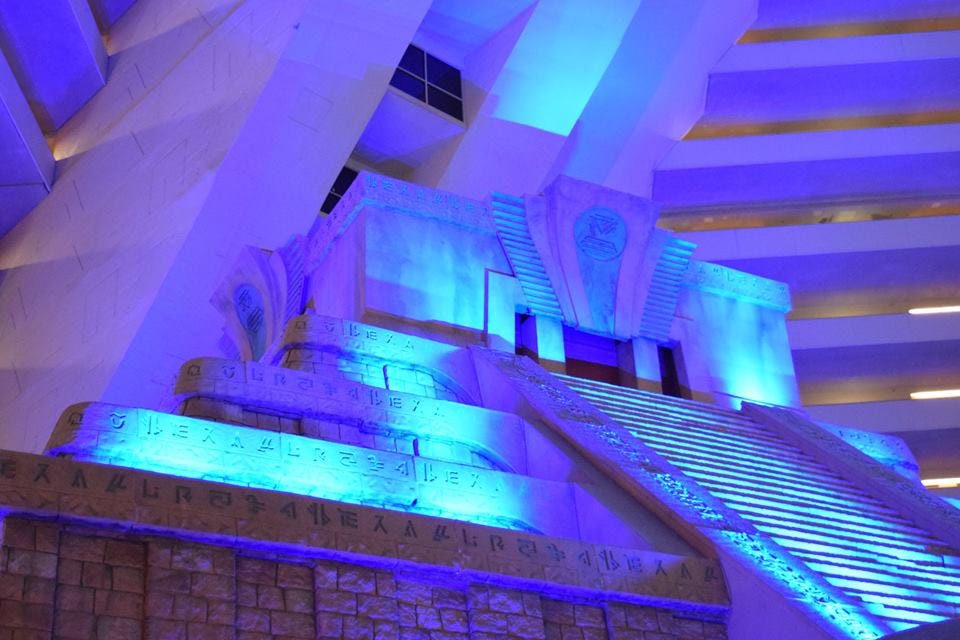
Photo credit: Robert Stark
The Wynn
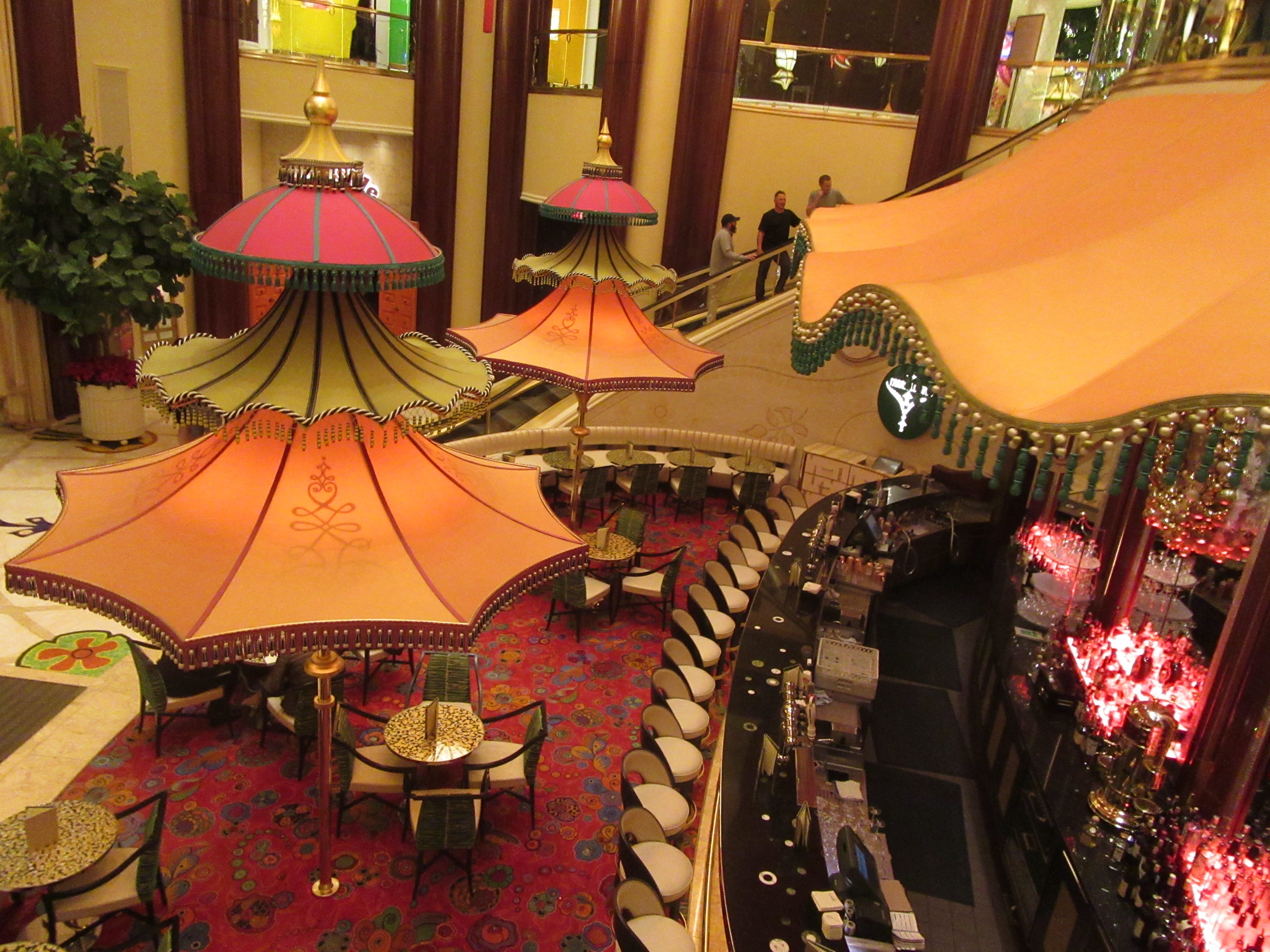
Photo credit: Robert Stark
On the record, I love Vegas’s aesthetics and atmosphere and enjoy visiting there. The question is can we find deeper meaning from post-modernism? Morton is trying to figure out what our inheritance from the past is. Vegas has all this Indo European pagan iconography, which Morton finds meaning from. A more optimistic way to look at Vegas is as Retrofuturism which is creating something futuristic inspired by the past.
The post modernist architecture of the 80s and 90s is a lot more interesting and dynamic than the minimalism of the 2010s. The newer casinos in Vegas like Cosmopolitan and Aria moved away from the postmodernist themes and almost feel like they could be anywhere from Century City in LA to Brickell in Miami to Buckhead in Atlanta to Tysons Corner in Northern Virginia. There have been these renovations of signage to be uglier or more bland. For instance, Treasure Island originally had a really cool pirate sign but its current sign looks like something you'd see at a suburban strip mall. Also, more charming and aesthetically dynamic neon signage has been replaced by soulless LED lights and screens. When Morton shows up for his first day at Casinolabs, he is surprised that it is in a nondescript office park, much like how tech corporations’ headquarters are, as minimalism conceals power.
Vintage Vegas Neon
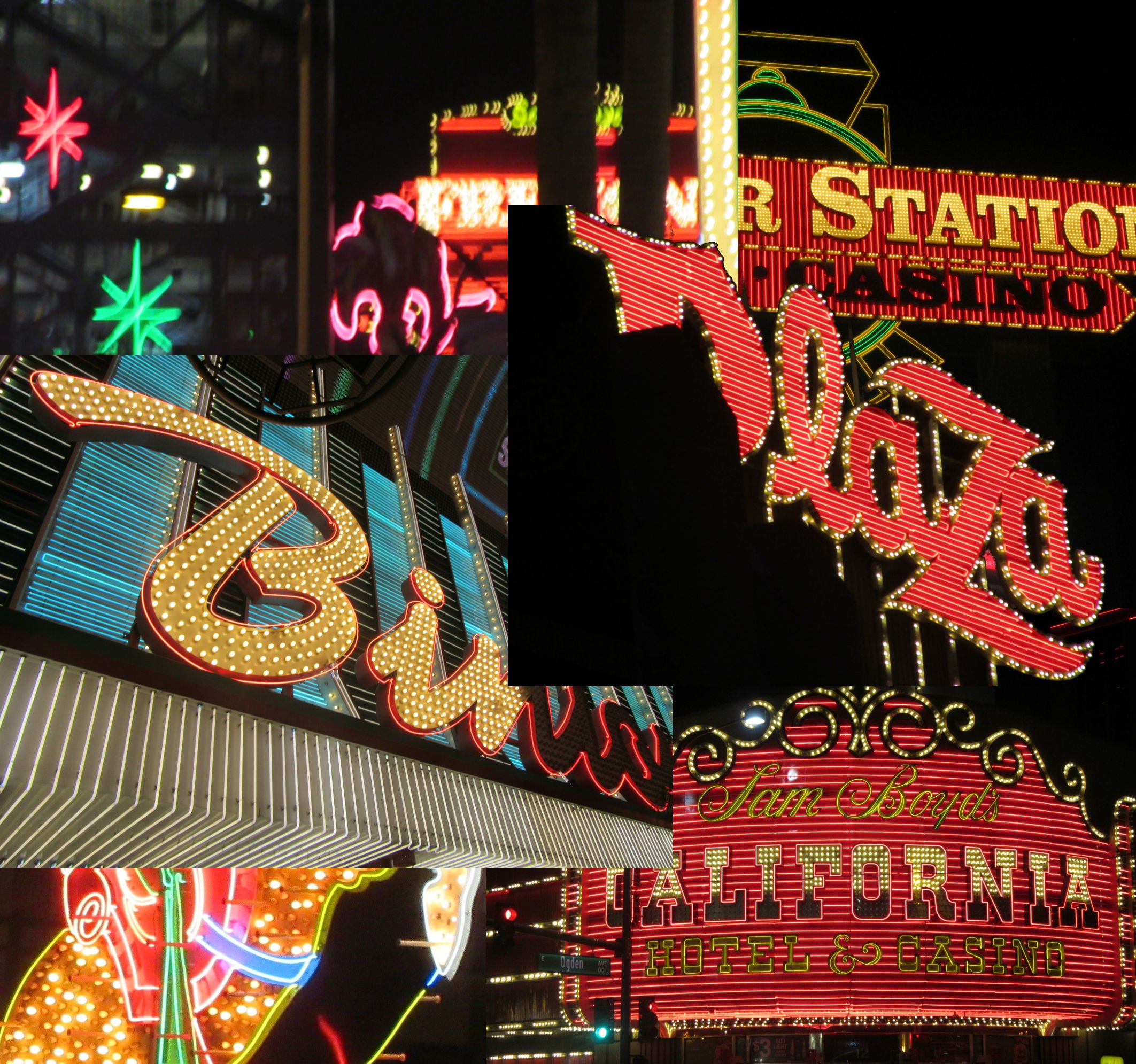
Photo credit: Robert Stark
Robert at the shuttered Riviera Casino site

Photo credit: Robert Stark
Minimalist renovations have become overtly political, which Casinolabs hints at when Scarlett makes a feminist comment that The Rape of The Sabine Women statue at Caesars Empire needs to be removed. Examples of minimalist renovations as woke iconoclasm include The Sir Francis Drake Hotel in San Francisco being renovated and rebranded due to Sir Francis Drake’s involvement in the slave trade and the Hollywood & Highland Mall in Hollywood which underwent a minimalist renovation that removed its giant postmodernist elephant statues. This was because the original mall and statues were inspired by the set of D.W. Griffith’s film, Intolerance, depicting ancient Babylon. D.W. Griffith’s previous film, The Birth of a Nation, glorified the Ku Klux Klan.
Abduction of a Sabine Woman by 16th-century Italo-Flemish sculptor Giambologna
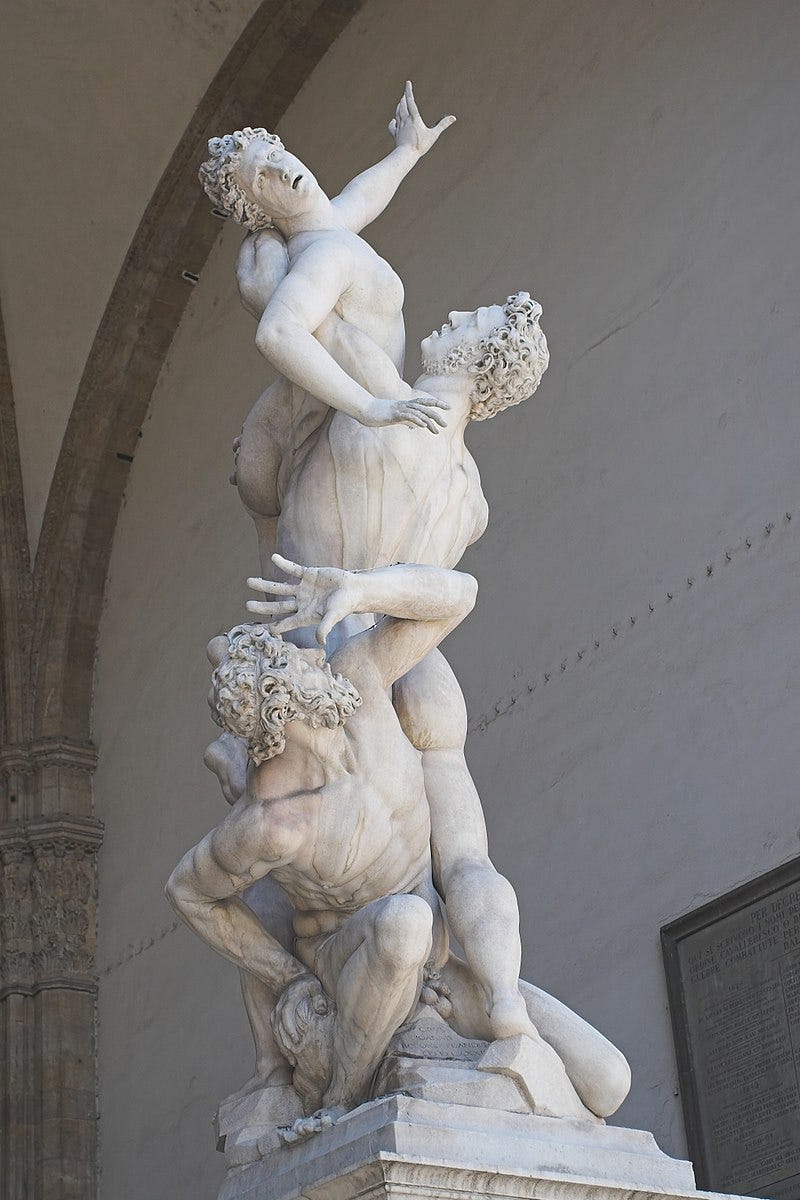
source: Wikipedia userThermos
Casinolabs plans to make Caesars Empire more multicultural, rejecting the White supremacy of Roman imperialism. Morton describes Vegas as multiculturalism, albeit more like ethnopluralism than leftwing multiculturalism in that there are lines of demarcation from one themed casino to another. What if we built self-contained communities like Vegas’s themed casinos that could serve specific cultural or demographic groups that match their themes?
Vegas is filled with this endless stimuli so it is not a place one associates with intellectual, philosophical, or spiritual contemplation. However, people go to Vegas to forget their mundane lives. Vegas is an otherworldly escape from mundane American life where everything looks the same with bland and boring chain businesses and strip malls. In Vegas, one can travel the world and different eras in time. Morton says that there is no time and space, almost like the astral plane.
Is the reflection in a rain puddle at the Rio a portal to another dimension?
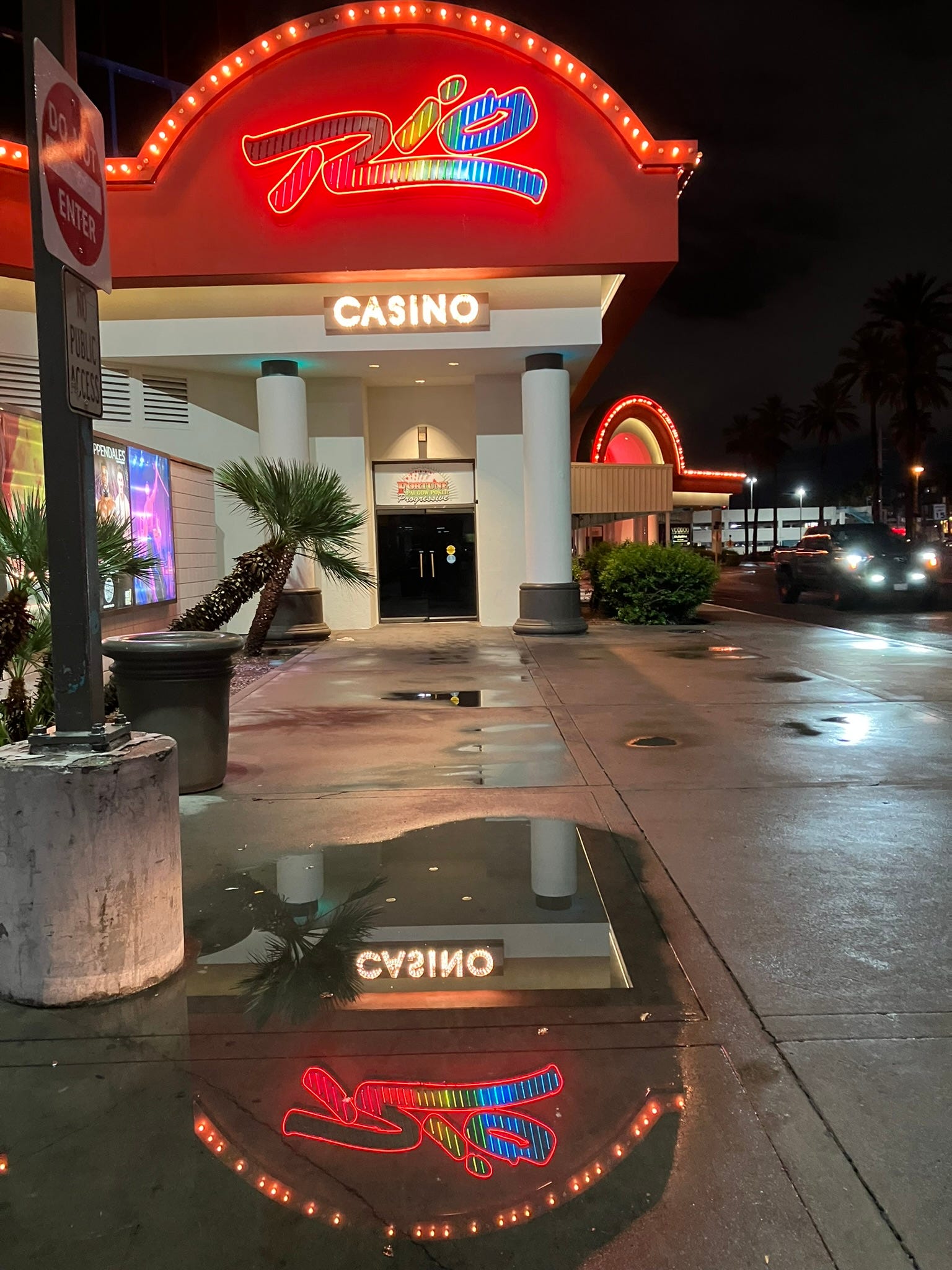
Photo credit: Robert Stark
The casino floor plan designs and the use of scents are designed as psychological manipulation to disorient people so that they hang around to drink and gamble. The labyrinth underneath Casinolabs represents this. Visual effects and the built environment are used to radically alter one’s consciousness, which has a metaphysical and mystical component. This also relates to what Jean Baudrillard called the simulation, which is referenced in the book.
The Flamingo
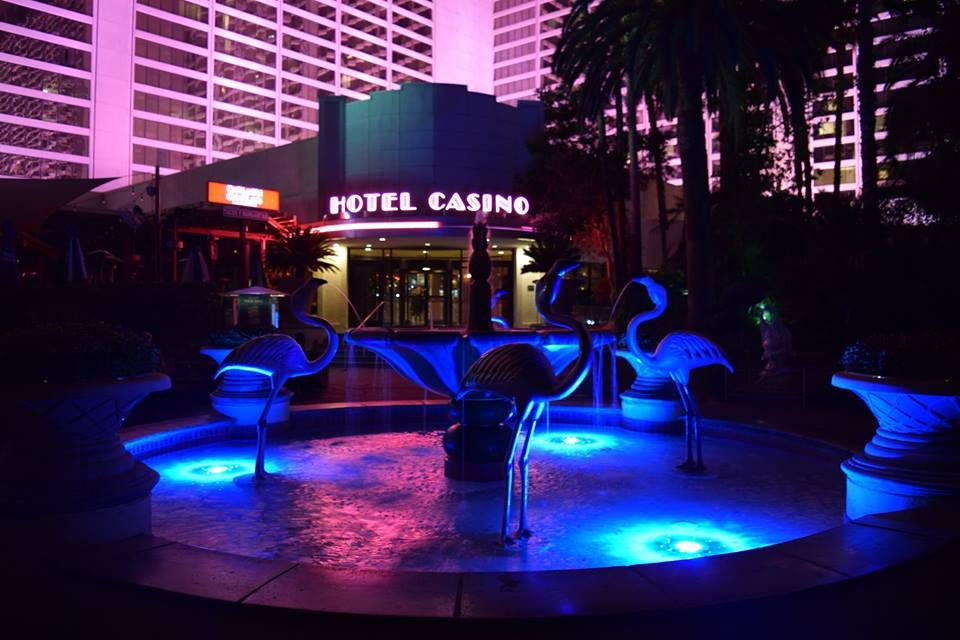
Photo credit: Robert Stark
There are a lot of similar themes in Casinolabs to my novel Vaporfornia. Both novels are about a social outcast who is taken on for a dream creative role that has some nefarious ulterior motive. In Vaporfornia, the protagonist gets blackmailed into being on a show revolving around incel culture that involves a lot of experimentation and humiliation rituals linked to a shadowy Hollywood cabal. There is a scene in Vaporfornia where the protagonist is taken to an undergrown network and experimented on, involving VR and accessing one’s subconscious in a laboratory setting, much like in Casinolabs.
Like Vaporfornia, Casinonlabs has detailed descriptions of architecture and interior spaces. Morton makes these architectural renderings, naively thinking they are going to be implemented. He also gets super autistic about how he wants there to be a Medieval French-themed Charlemagne casino next door to the existing Medieval English-themed Excalibur.
In a review in the Las Vegas Review Journal, the author, Lee Scrivner is referenced as saying that people have been comparing Casinolabs to the show Severance, a sci-fi thriller about a medical experiment that splits people’s personalities so that they retain no memories of their personal and outside life at work and no recollection of their job once they leave work. Casinolabs also reminds me of Hunter S. Thompson’s Fear and Loathing in Las Vegas, as far as being set in Vegas, the more surreal segments, and the zany characters and antics. The psychology of gambling addiction in Casinolabs is portrayed in a surreal manner much like how the movie Requiem for a Dream does with drug addiction. There are also similarities to the movie A Clockwork Orange, as far as the experiments. Casinolabs feels a bit like a movie and hopefully, there will be a cinematic adaption.